
So I like to think that big picture, the cats are the ones who are really teaching us how to groom them better.
Some will be more snarky and confrontational than others, but if your cat is an 8 out of 10 difficult, maybe the goal is to bring them down to a 6 or a 5 — and that's a win.
How do we do this? By being reactive. By keeping tabs on how frustrated they are in real time — are we adding to their frustration or is our action in each moment helping to bring their energy down?
For some guardrails, it's safe to say that MOST cats enjoy being delicately brushed around their face, neck and nape. They will often enjoy marking the comb (combs, not brushes) with their scent, rubbing their cheeks up against it. This is good. This is almost always enjoyable for the cat.
So that's your home base, your return to safety action when the cat might otherwise be getting frustrated.
And the area most likely to trigger an angry or stressed response? Usually that's the pantaloons, the rear legs.
If you think about their body shape and how they sit and move, there are some poses (like the loaf) where those muscles and bones are twisted up and the skin folds really aren't positioned well for the comb to go through easily, without risk of 'slamming' the comb into their hip joint, or foot.
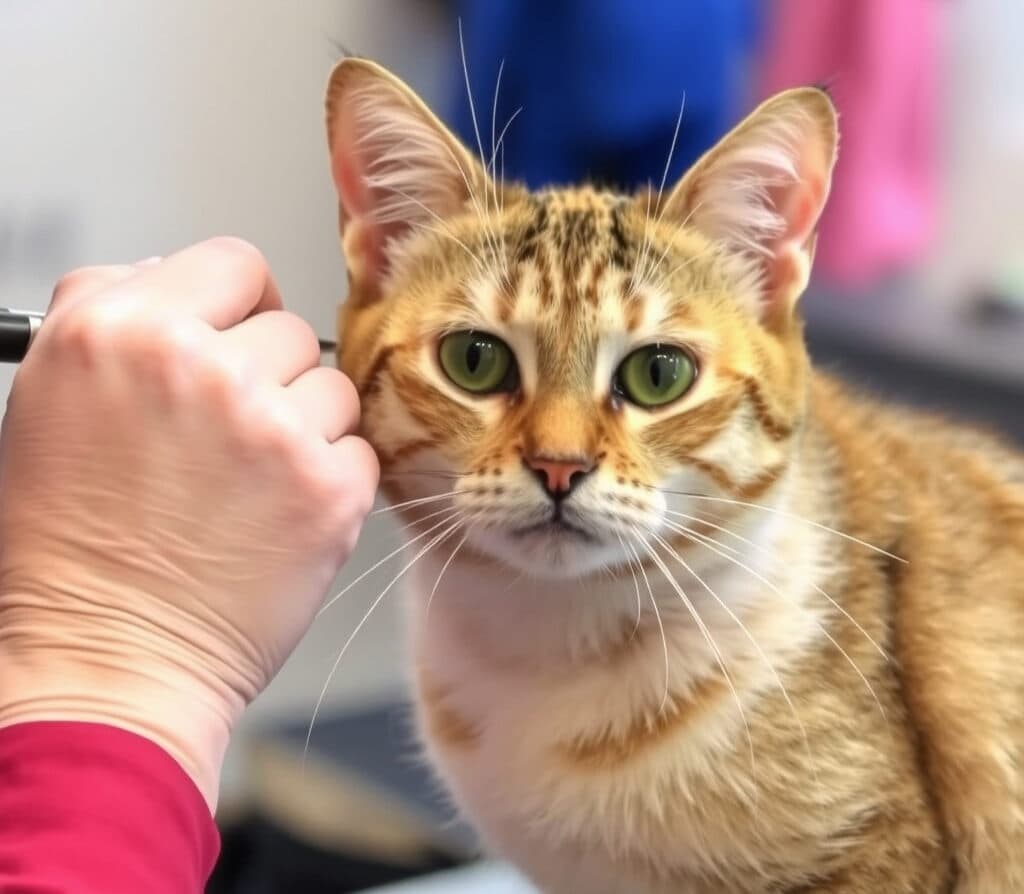
To counteract this, think about the position your cat is in as you are brushing them. Perhaps they are on your lap, or the couch... the ones who have trained you well will be onto it, and you'll know they like to be brushed on the kitchen table.... Or perhaps you never let them on the kitchen table, so that's not the place to start trying it now. They will be confused if you're grooming them in a place they are often told off for being. But I digress.
So where were we? We are thinking about how they are sitting in relation to the brushing technique (and part of their body) we are aiming to brush.
Be attentive, demonstrate you're listening by reacting to their signals. We are teaching them to TALK to us instead of SHOUT. Keeping their overall frustration in check by preventing a big build up.... And we achieve this by reacting.
In reality, it might actually take a few months of deliberate practice on your part to really focus and learn how to do this well.... Silly I know, it's just brushing a cat after all... but trust me, the more engaged you are, the better.
Cats are incredibly perceptive and they live in the moment beautifully. Attuned to their environment, still alert to risks and threat, they are incredibly capable at reading our emotions too. So be calm, friendly, affectionate... yourself... and if it takes a while to gain confidence, that's ok.. but the more confident you become at doing this, the easier it becomes. Usually. I mean, some cats are just always going to be difficult. Like my Molly. I just have to switch into 'work mode' with her, and frankly, she needs a slightly firmer hand.
But nothing is EVER done punitively. I may be more assertive at times (and this slides around too) but I'm never trying to make her fearful. So how we carry ourselves is important too.
Let's recap:
Your cat is the teacher, you're the student. Learn to mix up your technique, learn where the trigger points are, and think about body mechanics to 'open up' that leg, or angle, or whatever, so the brush can make a clean, smooth pass without creating anxiety that the comb will hit their feet, hips or worse.
And remember you're keeping tabs on their overall disposition.... Getting a bit difficult? Switch it up, come back up to the neck.
And recognize that it will take time to get better, but you'll have 'aha!' moments along the way, and if your cat sees you are getting better, their trust in your actions will grow too.
A final word: Cats do a pretty good job of cleaning themselves and spend about the same amount of time each day grooming, regardless of what we do... but we can step in and help them and it will often be great to prevent matting, and very likely will prevent furballs too. It's not the end of the world if they get furballs, but it does potentially pose a risk of one day having an internal blockage, so yeah, best to avoid that.
And some breeds REALLY need our help. Persians, Maine Coons, British Shorthairs, Ragdolls, Siberians... they are bred to be super fluffy and they all need help with their upkeep. And older cats too will often need help. If they are arthritic, have tooth pain, changes to their thyroid, they are all things that can see a change in either coat condition, or ability to self groom.
Oh... and personally, I don't like to teach how to brush the belly. The belly does contain less follicles of fur per square inch, so that's good, and also, I am just hesitant to teach this technique because there's a small risk you can accidentally brush the loose flappy skin around their armpit and 'catch' it.... So if you do want to get them sitting in your lap like a baby, that's cool, but just be mindful that you need to be careful about where and how you brush.
Thanks for reading!